Love Daddy: A Designer's Review for Craft Fair Success
Stepping into the role of an experienced embroidery designer, I recently sat down to evaluate a specific digital asset titled Love Daddy. My goal was simple: determine if this design has the potential to become a best-selling item at our upcoming weekend craft fair. In the world of handmade goods, a design is not just pixels on a screen; it is a physical object that must withstand the scrutiny of a busy booth, the glare of sunlight, and the touch of a potential buyer. This review breaks down exactly how Love Daddy performs as a commercial product, where it shines, and what practical steps are required before turning it into inventory.
First Impressions and Market Positioning
The title Love Daddy immediately sets a tone that is affectionate, direct, and slightly playful. It feels less like a generic greeting and more like a personal declaration. For a craft fair audience, this emotional connection is vital. The description suggests a high-quality finish suitable for pillows, t-shirts, and sweatshirts, which implies a versatility that we can leverage. Visually, I anticipate the design will land somewhere between modern rustic and soft farmhouse. It avoids being overly ornate, which makes it perfect for everyday items rather than just holiday novelties. This balance allows it to appeal to a broad demographic looking for gifts that feel heartfelt without being cheesy.
Product Applications: Where Love Daddy Sells Best
When preparing my table display, I had to decide which products would showcase this design most effectively. Not every surface is created equal, and the success of Love Daddy depends heavily on the canvas chosen.
- Tote Bags and Market Bags: These are the bread and butter of any handmade shop. An embroidered tote bag design featuring Love Daddy offers a large, flat area that allows the stitching to breathe. It photographs beautifully for online listings and serves as a functional gift that customers use daily.
- Kitchen Towels and Aprons: There is something inherently charming about apron embroidery or tea towel embroidery with a phrase like this. It fits perfectly in a kitchen setting, making it an ideal housewarming or Father's Day gift. The contrast of thread against white or cream linen creates a premium look that elevates the perceived value of the item.
- Pillow Covers and Home Decor: For a softer approach, placing Love Daddy on a throw pillow adds a cozy, welcoming vibe. This works exceptionally well for boutique makers targeting home decor enthusiasts who want to add a personal touch to their living spaces.
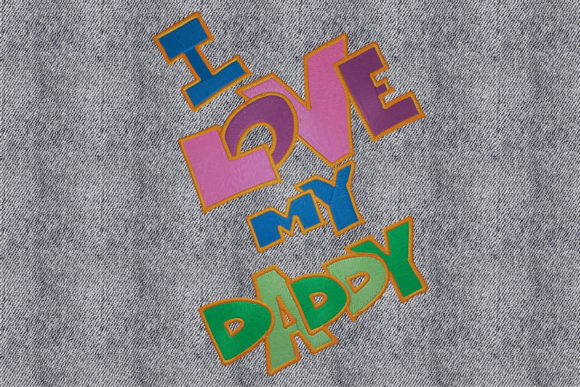
- Caps and Embroidered Patches: While smaller, these items offer a different kind of appeal. A cap with this design acts as a wearable statement. However, the curved surface requires careful attention to placement. Alternatively, turning the design into an embroidered patch allows for application on denim jackets or backpacks, expanding the reach of the original digital file.
Production Practicality and Batch Efficiency
As a business owner, I need to know if Love Daddy is efficient to produce. Can I run this through the machine ten times in an hour? The design needs to be clear enough to understand at a glance but detailed enough to look expensive. If the design is too dense, production slows down. If it is too sparse, it looks cheap. Ideally, this design should work as both a small accent on a pocket and a larger focal point on a chest or center of a garment.
Photography is another critical factor. For an Etsy seller or digital seller, the ability to create a printable mockup is essential. Does the text remain legible when shrunk down for a thumbnail image? Does the texture of the stitches show up clearly in photos? If Love Daddy maintains its clarity in both close-up shots and wide-angle booth displays, it becomes a much stronger asset for marketing.
Visual Appeal and Customer Engagement
In a crowded market, visual appeal dictates whether a customer stops at your booth. Love Daddy has the potential to stop traffic because it speaks directly to family dynamics. When a customer sees a finished product, they should immediately think, "I need this for my dad" or "This would make a great gift." The design contributes significantly to brand consistency; it signals that your shop values sentimentality and quality craftsmanship.
However, the design must also hold up under scrutiny. A finished product that looks rushed or poorly stitched will kill sales instantly. The thread colors chosen must complement the fabric texture. If the background is a rough burlap, the threads need to be thick enough to stand out. If the fabric is smooth cotton, the stitch density must be precise to avoid puckering.
Crucial Production Notes and Careful Use
Before committing to a full batch, there are several technical considerations that must be addressed. First, check the stitch density. Areas with heavy stitching can cause issues on thin fabrics or textured towels. If the design includes tiny details or small lettering, test them thoroughly. On dark fabric, the underlay might need adjustment to ensure the top thread pops. Similarly, on curved surfaces like caps, the distortion of the design must be accounted for during digitizing.
It is also vital to verify the hoop size requirements. If the design is too large for standard hoops, it may require multiple hooping sessions, which increases labor time and the risk of misalignment. Always inspect the stabilizer choice; using the wrong type can lead to wrinkles or poor registration. For example, tear-away stabilizer might be necessary for a t-shirt, while cut-away is better for a pillow cover that will be washed frequently.
Final Verdict for the Creative Entrepreneur
To summarize, Love Daddy appears to be a versatile and emotionally resonant choice for a craft fair lineup. Its strength lies in its ability to translate from a digital file to a tangible, high-value handmade product. Whether used for a tote bag design, a kitchen accessory, or a decorative pillow, it has the potential to drive sales and engage buyers.
However, success relies on execution. Before listing this as a commercial embroidery item or selling it as a small shop product, you must perform due diligence. Test the design on scrap fabric to check thread contrast and spacing. Confirm the commercial licensing terms associated with the embroidery file to ensure you are legally allowed to sell the finished goods. Create at least one real-world mockup to see how the design interacts with light and shadow. By taking these precautions, you ensure that Love Daddy delivers the quality and charm that customers expect from a professional handmade brand.