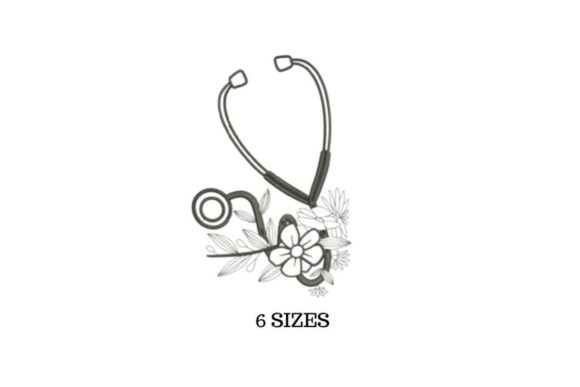
Nurse: A Designer's Review for Small Business Merch
As a professional embroidery designer who has spent years refining designs for commercial use, I approach every new asset with a critical eye. When evaluating Nurse, the immediate question is not just about aesthetics, but about its viability as a core component of small business merchandise and branded patch collections. The description promises great details and multiple file formats, which are promising signs for a digital embroidery file intended for serious production.
This review focuses on how Nurse performs when transitioning from a simple gift idea to a functional brand asset. Whether you are running a boutique, a handmade shop, or an Etsy store, understanding the nuances of this design is crucial before committing to mass production.
First Impressions and Visual Personality
The title "Nurse" combined with the description suggests a design that balances professionalism with warmth. In the world of brand identity, few roles carry the same weight of trust and care. A design meant to represent this profession must feel elegant yet sturdy enough for daily wear. Based on the emphasis on "great details," Nurse appears to lean towards a premium, slightly decorative style rather than a purely minimalist icon.
For small business owners, this distinction matters. If your brand aims for a rustic or playful vibe, a highly detailed design might feel too formal. However, if you are creating custom apparel for a medical-themed event, a healthcare pop-up shop, or a boutique selling wellness products, the intricate nature of Nurse can elevate the perceived value of the finished product. It feels like a design that commands respect while remaining approachable, making it suitable for everything from staff uniforms to customer appreciation gifts.
Real-World Application in Commercial Projects
The true test of any machine embroidery design lies in its versatility across different substrates. Let's imagine a scenario where a local café or a creative studio wants to launch a line of branded goods. How does Nurse fit into this ecosystem?
- Embroidered Patches: This is likely the strongest application. For a small business selling patches as collectibles or branding tools, Nurse offers the detail needed to stand out. It works exceptionally well as a chest logo accent on denim jackets or as a standalone patch on backpacks and tote bags.
- Staff Uniforms and Aprons: In a bakery or florist setting, adding a subtle nod to caregiving through apron embroidery can create a unique connection with customers. The design's detail level ensures it looks crisp even on the heavy cotton canvas often used for work aprons.
- Cap Embroidery: For caps, the design needs to be scaled correctly. If the stitch density is manageable, it serves as a perfect focal point on a trucker hat or a structured cap, reinforcing the brand's commitment to quality.
- Tote Bag Design: A tote bag design featuring Nurse is an excellent marketing tool. It acts as a walking advertisement for a small business, whether sold as merchandise or given away at craft fairs.
Furthermore, the mention of "multiple embroidery file formats" is a significant advantage for commercial embroidery operations. It allows decorators to adapt the design for various machines without losing fidelity, ensuring consistency across different production runs.
Critical Considerations for Production
While the potential is high, there are specific areas where Nurse requires careful handling to avoid common pitfalls in embroidery file production. Not every design suits every surface, and ignoring these factors can lead to damaged goods and dissatisfied customers.
Small Patch Sizes and Cap Fronts: Designs with "great details" often struggle when shrunk down. Before using Nurse for tiny lapel pins or very small cap logos, you must verify the minimum viable size. High stitch density in small areas can cause thread bunching, leading to a messy finish that undermines the finished product's quality.
Fabric Texture and Color Contrast: The performance of this design will vary significantly depending on the fabric texture. On smooth, tight weaves like twill, the details will shine. However, on textured fabrics like raw denim or heavy fleece, the fine lines might get lost. Additionally, dark uniforms require careful selection of thread colors. Light-colored details may need underlay adjustments to ensure they pop against dark backgrounds without sinking into the fabric.
Wash Durability: For items that need frequent washing, such as work shirts or kitchen aprons, high-density designs can sometimes trap moisture or snag. It is essential to confirm that the stabilizer choice matches the fabric weight to prevent puckering, which ruins the visual consistency of the brand.
Impact on Brand Identity and Customer Trust
In the competitive landscape of small business merch, the quality of your embroidery speaks volumes about your brand. A sloppy stitch job can erode customer trust instantly, while a precise, beautifully executed design reinforces professionalism.
Using a well-crafted design like Nurse signals that you care about the details. It elevates the handmade product status, allowing you to charge a premium price. When a customer sees a sharp, clean embroidery on a tote bag or a patch, they perceive higher value. This visual consistency helps build recognition, turning a simple item into a memorable brand touchpoint. It transforms a generic gift into a piece of art that resonates with the recipient's appreciation for the nursing profession or the care your business provides.
Practical Designer Notes for Implementation
Before you hit the "run" button on your embroidery machine, follow these essential steps to ensure success:
- Test in Black and White: Convert the design to grayscale first. This helps you visualize the stitch density and spacing without the distraction of color. If the black and white version looks muddy, the colored version will likely suffer.
- Check Small Patch Size: Create a mockup of the design at your smallest intended size. Ensure all text remains legible and no details are lost due to scaling.
- Review Thread Color Contrast: Select thread colors that offer high contrast against your target fabric. Low contrast can make the "great details" invisible.
- Inspect Spacing and Hoop Size: Confirm that the hoop size required for the design fits your production workflow. Large designs may require multi-hoop setups, which can introduce alignment issues.
- Test on Real Fabric: Never embroider directly onto the final product without a test run. Use scrap fabric that matches the grain and stretch of your actual inventory.
- Use Proper Stabilizer: Match the stabilizer (cut-away, tear-away, or wash-away) to the fabric type. Heavy-duty projects usually benefit from cut-away stabilizers for longevity.
- Create a Printable Mockup: Use a printable mockup to show clients what the final result will look like. This manages expectations and secures approval before production begins.
- Confirm Commercial Licensing: Verify the license terms associated with the digital embroidery file. Ensure you have the right to sell products featuring this design commercially.
By treating Nurse not just as a graphic but as a strategic design asset, you can maximize its impact on your bottom line. Whether you are creating work uniforms, event merchandise, or unique embroidery pieces for the market, attention to these technical details will set your brand apart.
Ultimately, Nurse represents more than a symbol; it is a statement of care and quality. With the right execution, it becomes a cornerstone of your brand identity, fostering engagement and loyalty among your customers. Take the time to test, refine, and produce with precision, and this design will serve your small business admirably for years to come.